
Cadaqués is a seaside village tucked between its bay and the mountains of Cap de Creus. That isolation is what has preserved it: stone streets, white houses and a bay full of boats that drew Dalí, Picasso, Lorca and Duchamp. In one day you have time to see the essentials if you plan well, and this guide shows you how.
If you only have one day, don’t miss:
- The old town and the church of Santa Maria, with its Baroque altarpiece.
- The Salvador Dalí House-Museum in Portlligat (booking required).
- The Cap de Creus lighthouse, the easternmost point of the Iberian Peninsula.
- A swim at one of the village beaches.
- Sunset and dinner on the seafront promenade.
Before you go
How to get to Cadaqués
By car, you reach it on the road that comes from Roses and crosses the hills, with plenty of bends: allow for this when working out your travel time. Without a car, the Moventis Sarfa bus links Cadaqués with Figueres, stopping in Roses. Check the current timetable on the Moventis website before you set off, as it changes with the season.
Where to park
The centre of Cadaqués has narrow streets and very few parking spaces, and in summer and at weekends it fills up quickly. The most convenient option is the Riera de Sant Vicenç car park, a few minutes’ walk from the centre and the beach. The earlier you arrive, the easier it will be.
What to book
The Salvador Dalí House-Museum can only be visited with an advance booking: visitors go in small groups every ten minutes, and in summer tickets sell out days ahead. Book it before you plan the timing of the rest of your itinerary. The museum closes every year from early January to mid-February.
Hour-by-hour itinerary
9:00 · Old town
The stone streets and the church of Santa Maria
Start in the old quarter, the former walled town of medieval origin. Underfoot you’ll find the rastell, the traditional paving of stones set on edge that still covers many of the streets. Walk up to the church of Santa Maria, built between the 16th and 17th centuries in late Gothic style. Inside is the village’s big surprise: a 23-metre-high gilded Baroque altarpiece dedicated to the Mare de Déu de l’Esperança (Our Lady of Hope), designed by Jacint Moretó and made by the sculptors Pau Costa and Joan Torres. The church square offers one of the best views over the bay.
On your way down to the sea, look out for the Torre des Baluard, the last surviving part of the medieval castle, now incorporated into the Town Hall building.

10:30 · Portlligat
The Salvador Dalí House-Museum
Very close to the centre is Portlligat, the small fishing cove where Dalí lived and worked for decades. His home, now the Salvador Dalí House-Museum, is a maze of fishermen’s huts joined together, and the visit lets you see how the painter lived and worked. Remember that you need to have booked, and it’s best to arrive a few minutes before your time slot.
After the visit, spend a while on Portlligat beach: it’s small and quiet, and some of the boat trips along the coast leave from here.

13:00 · Lunch
Fish and seafood by the harbour
Head back to the centre for lunch. Cadaqués lived from fishing for centuries, and seafood is still what’s most worth trying. In our Cadaqués food guide you’ll find restaurants for every budget. In summer, book a table if you want to sit on the promenade.
15:00 · Cap de Creus
The lighthouse and the Tudela landscape
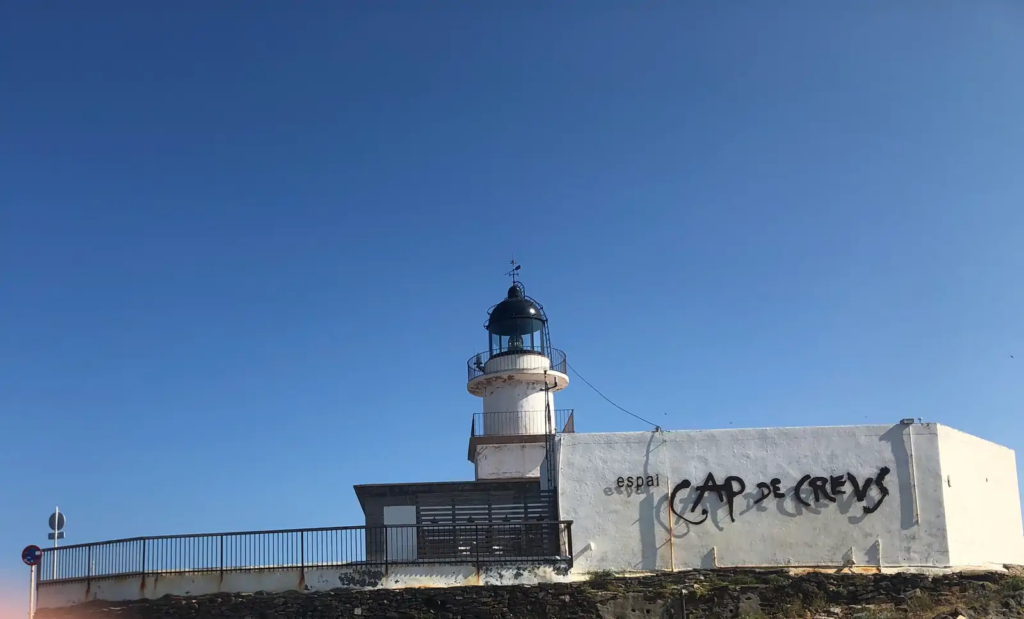
In the afternoon, head up to the Cap de Creus Natural Park. The lighthouse marks the easternmost point of the Iberian Peninsula, and inside it is the Espai Cap de Creus, a small museum about the park that also serves as an information office.
A little before you reach the lighthouse is the Tudela area, with wind-sculpted rocks that locals have given names such as the Camel, the Eagle and the Tortoise. It’s easy to see why this landscape inspired Dalí so much.
Getting there in summer: during the high season, the lighthouse road is closed to cars. You can leave your vehicle at the Corral d’en Morell car park in Cadaqués and go up on the shuttle bus, which stops at Guillola, Tudela and the lighthouse. You can also cycle up the road or walk along the old lighthouse path and the GR11, which are always open. Dates and timetables change every year: check them on the Natural Park website before you go.
18:00 · Beach
A swim before evening
On the way back, end the afternoon in the water. The village beaches are small and pebbly, but the water is clear and calm most days. In the village itself you have the Platja Gran, opposite the Casino, and the platja des Portal, at the foot of the old town. South of the village is the Llané Gran, and in Portlligat the beach you visited in the morning. You’ll find them all in our guide to beaches and coves.
If it rains or the tramuntana wind is too strong for swimming, the Cadaqués Museum, a former dance hall, holds temporary exhibitions on Dalí and other artists connected with the town.

20:00 · Evening
Sunset, dinner and a stroll
As the sun goes down, the seafront promenade and the streets of the centre fill with people. It’s time for dinner outdoors and a stroll among the art galleries, of which Cadaqués has many. In summer, the bars in the centre keep the night going.
If you have more time
- A boat trip along the Cap de Creus coast, from Portlligat or the Platja Gran.
- Kayaking or sailing in the bay: there are schools and activity companies in the village itself.
- The Cadaqués market, if your visit coincides with it.
- Roses, the neighbouring town: here’s what to see in Roses in two days.
When to go to Cadaqués
Spring and September are the best times: good weather, water that is still pleasant in September and far fewer people than in July and August. In summer the village is packed and parking is hard, but there’s more atmosphere and the Cadaqués International Music Festival, held every summer since the 1970s. In winter it’s quiet and very beautiful, but the Dalí House-Museum closes for a few weeks and so do some restaurants. Bear the tramuntana in mind: on days when it blows hard, the sea gets rough and Cap de Creus can be uncomfortable.
Frequently asked questions about Cadaqués
Is it easy to park in Cadaqués?
In summer and at weekends, no. The centre has very few spaces; the most practical option is the Riera de Sant Vicenç car park, a few minutes’ walk away, and arriving early.
How do you get to Cadaqués without a car?
By the Moventis Sarfa bus from Figueres, which stops in Roses. Check the timetable on the operator’s website, as it varies with the season.
Do you need to book to visit the Dalí House-Museum?
Yes, always. Visits are in small groups and by advance booking only, on the Fundació Gala-Salvador Dalí website.
Can you drive to the Cap de Creus lighthouse?
Not in summer: during the high season the road is closed to cars, and you go up on the shuttle bus from the Corral d’en Morell car park, by bike or on foot.
How much time do you need to see Cadaqués?
One day is enough to see the old town, Portlligat and Cap de Creus. If you want to enjoy the beaches at a relaxed pace, take a boat trip or walk in the natural park, it’s worth staying two or three days.
What beaches are there in Cadaqués?
In the village itself there are the Platja Gran, the platja des Portal and the Llané Gran, and nearby, Portlligat. They are small and pebbly, with very clear water. The coves of Cap de Creus are best reached on foot or by boat.
To discover everything you can do in the village, see our Cadaqués page.